You have a budget. You need sales. And everyone has a different opinion on where to spend it.
Some people swear by Meta. Others say Google is the only platform worth running. Most brands waste months testing both without a clear strategy and end up frustrated with both.
Regardless of the platform, leveraging AI bidding strategies is essential to scale your campaigns. So which one actually wins in the Meta Ads vs Google Ads for ecommerce debate? The honest answer is it depends on your brand, your product, and where your customer is in their buying journey. But by the end of this post you will know exactly which one to start with and why.
Meta Ads vs Google Ads for Ecommerce: Understanding the Core Difference
Before comparing results you need to understand what each platform actually does because they work in completely different ways.
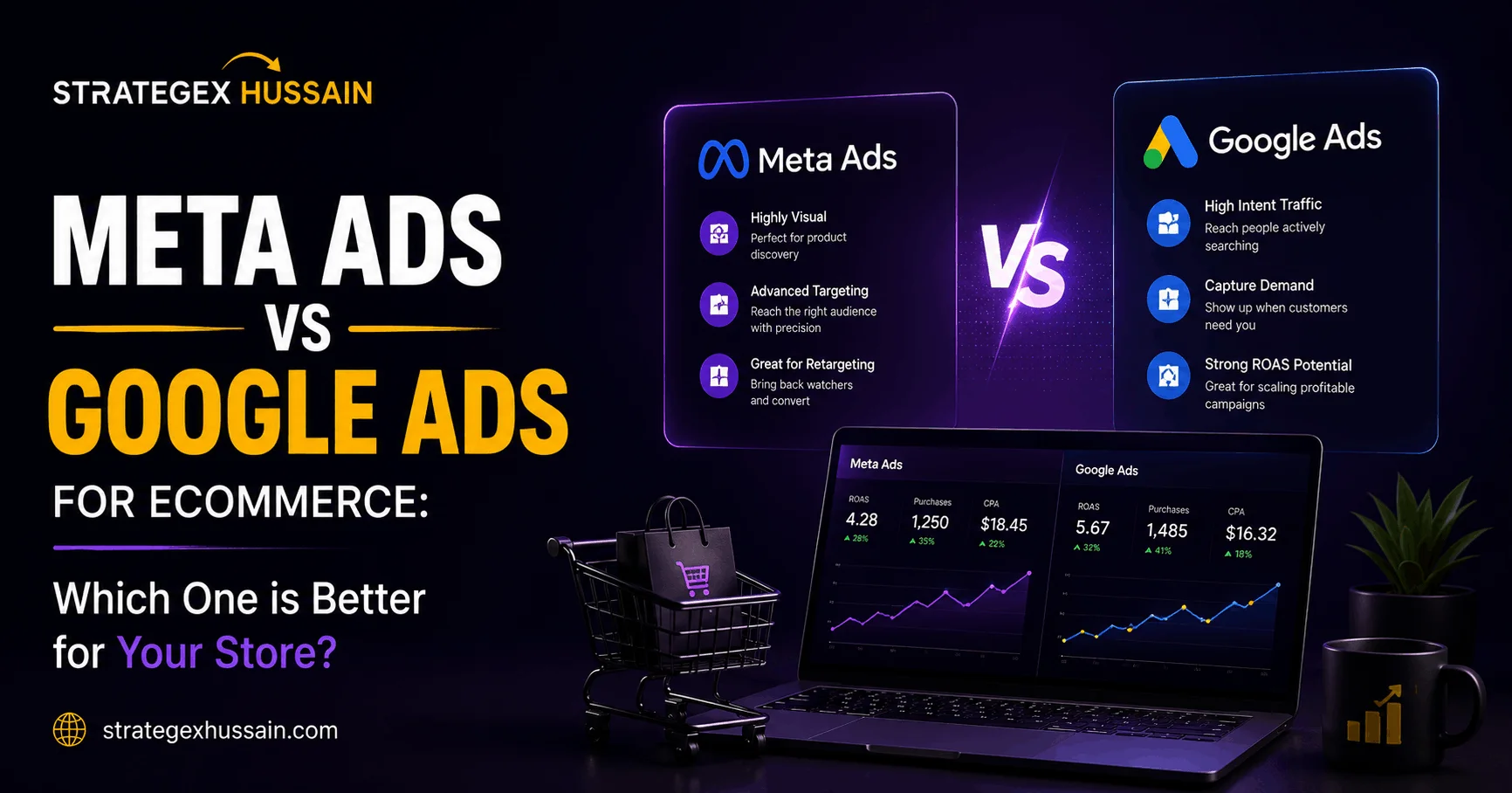
Meta Ads, which includes Facebook and Instagram, are interruption-based. You are showing your product to people who were not looking for it. Your job is to stop the scroll, create desire, and convert someone who had no intention of buying when they opened the app.
Google Ads, specifically Google Shopping and Search, are intent-based. You are showing your product to people who are actively searching for it right now. They already want to buy something. Your job is just to make sure your product shows up and looks better than your competitors.
This fundamental difference changes everything about how you use each platform.
When Meta Ads Win for Ecommerce
Meta Ads are the stronger choice when you need to build demand for a product people do not know they need yet.
If your product is new to market, visually compelling, or solves a problem people have not actively searched for, Meta is where you build awareness and create desire. You reach people before they even know they want what you are selling.
Meta also wins for retargeting. Showing ads to people who visited your site, watched your videos, or engaged with your content is one of the highest ROAS activities in any ecommerce ad account. That warm audience is almost always cheaper to convert on Meta than anywhere else.
Meta Ads also give you far more creative control. Video, carousels, stories, reels, collections — the format options let you tell a story in a way Google simply cannot match.
Meta Ads work best for: New product launches, impulse purchases, fashion and beauty brands, visually driven products, retargeting campaigns, and building brand awareness at scale.
When Google Ads Win for Ecommerce
Google Ads are the stronger choice when people are already searching for what you sell.
If someone types “buy wireless earbuds under $50” into Google and your product shows up, that person is ready to buy. You are not creating demand. You are capturing it. That is a fundamentally easier conversion and it shows in the numbers.
According to Google Ads support documentation, Shopping campaigns average significantly higher purchase intent than display or social ads because users are actively in buying mode when they search.
Google Shopping in particular is powerful for ecommerce because your product image, price, and reviews show up directly in search results before someone even clicks. The decision to buy often happens before they reach your site.
Google Ads work best for: Products with high search volume, competitive categories where buyers compare options, higher ticket items where people research before buying, and brands with strong SEO and landing pages.
The Real Answer: Use Both But Start With One
The brands doing the most revenue in ecommerce are not choosing between Meta and Google. They are using both strategically.
Meta builds the top of the funnel. Google captures the bottom. Together they cover the entire buyer journey from first discovering your brand to finally making the purchase.
But if you have a limited budget and need to pick one to start, here is the framework:
Start with Meta Ads if your product is new, visual, or not yet being searched for. You need to create awareness before you can capture intent. There is no search volume to capture if nobody knows your product exists yet.
Start with Google Ads if your product has clear search demand and people are actively looking for it right now. You will get faster results because you are meeting buyers exactly where they already are.
Budget Split: How to Divide Spend Between Both Platforms
Once you are running both platforms a common starting split for ecommerce brands is 60 percent Meta and 40 percent Google. Meta gets the larger share because creative testing, audience building, and retargeting require more budget to optimize properly.
As you scale and find what works, adjust based on ROAS. Let the numbers tell you where to put more money. Do not let personal preference or someone else’s opinion drive your budget decisions.
You can also read our post on why most ecommerce brands waste money on Meta Ads before you start spending to make sure your Meta campaigns are set up correctly from day one.
Meta Ads vs Google Ads for Ecommerce: Quick Comparison
Meta Ads: Best for awareness, impulse products, visual brands, retargeting, and building audiences. Requires strong creative. Results take longer to optimize but scale well.
Google Ads: Best for capturing existing demand, high intent buyers, and products with search volume. Lower creative barrier but more competitive on popular keywords. Faster initial results for in-demand products.
Both together: The most powerful combination for any serious ecommerce brand. Meta fills the top of the funnel. Google closes the bottom. Together they cover every stage of the buyer journey.
Frequently Asked Questions
I have a limited budget. Should I use Meta Ads or Google Ads first?
This is one of the most common questions new ecommerce store owners ask. The answer depends on your product. If your product is visual, solves a problem people do not actively search for, or is an impulse buy, start with Meta. If people are already searching for your product on Google, start there. With a limited budget you want to go where your buyer already is rather than trying to create demand from scratch.
My Meta Ads performance keeps dipping and I do not know what the problem is. What should I check?
This is a frustration many store owners face. The most common causes are creative fatigue (your audience has seen the same ads too many times), audience saturation (you have exhausted your target pool), or a tracking issue after iOS privacy updates. Start by refreshing your creative, then check your frequency score in Ads Manager. If frequency is above 3 your audience is oversaturated and you need new creatives or a broader audience.
Do I need a big budget to run Google Ads for my ecommerce store?
Not necessarily. Google Shopping can work with as little as $20 to $30 per day for niche products with low competition. However in competitive categories the cost per click can be high and you may need more budget to get enough data to optimize. Start small, track your cost per purchase, and scale what is working.
Can Meta Ads and Google Ads work together or do they compete with each other?
They work together, not against each other. Think of Meta as the platform that introduces people to your brand and Google as the platform that captures them when they come back to search for it. Many ecommerce brands find that running both together increases overall ROAS because each platform covers a different stage of the buying journey.
How do I know which platform is actually driving my sales?
Attribution is a real challenge when running both platforms simultaneously. Use UTM parameters on all your ad links and track them in Google Analytics. You can also look at assisted conversions to see which platform is contributing to sales even when it is not the last click. Neither Meta nor Google will give you a fully accurate picture on their own so third party attribution tools can help when you are scaling.
The Bottom Line
The Meta Ads vs Google Ads for ecommerce debate does not have one winner. Both platforms are powerful. Both have a place in a serious ecommerce marketing strategy. The mistake is picking one and ignoring the other forever.
Start where your customer is. Build from there. And let the data guide every decision you make.
The brands that treat paid advertising as a system rather than a guessing game are the ones that scale consistently. Which one are you going to be?
Not sure which platform is right for your ecommerce brand? We audit your current setup and build a paid strategy that actually fits your product and budget. Get a Free Proposal here.
If you need professional help scaling your ad spend, feel free to check out our complete digital marketing services.